Breadcrumbs
- News
- News Archive
- Nursing Students Assess, Address Community Health Needs Throughout County

In professor Deborah Meshel’s community health and nursing course, students don’t just study theory — they actively engage with vulnerable, at-risk populations across the lifespan.
All Dominican University of California senior nursing students complete four units of community health and nursing in their first semester of senior year. This includes a weekly lecture and 90 hours of clinical experience in community-based settings.
On average 60 students are placed with sites across Marin and the Bay Area. Meshel selects sites that provide meaningful, hands-on experiences where students can work directly with populations outside of the hospital setting.
Current and recent sites include Marin County Jail, Vivalon, Marin Community Clinics, By the Bay Health, Kids Cooking for Life, Bayside Drug Rehabilitation, Community Action Marin, and multiple K–12 schools throughout the Bay Area.
“Our nursing students are expected not only to participate, but also to assess the needs of the population they are serving and design a small, evidence-informed intervention,” Meshel says.
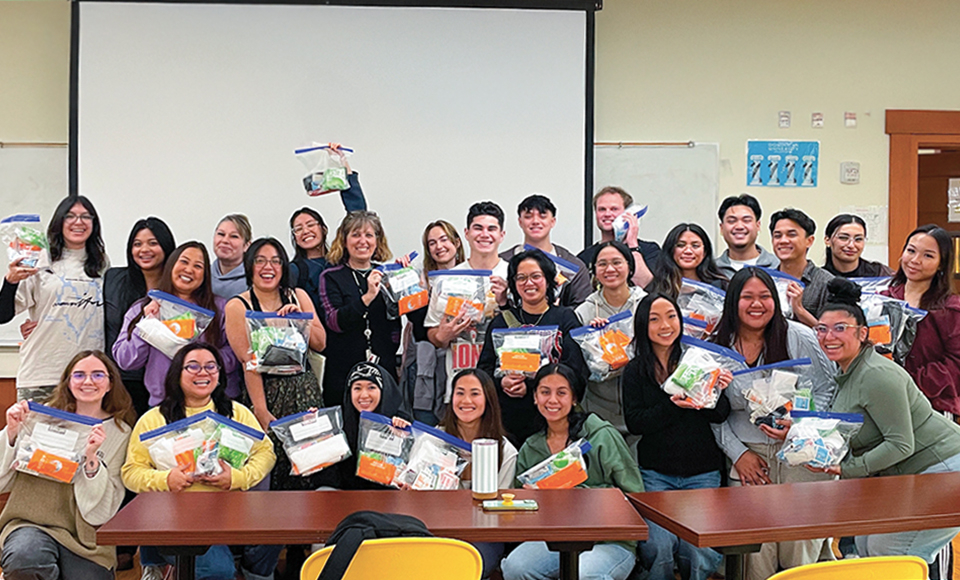
Recently, following a classroom discussion on health disparities, the students prepared care bags to distribute to individuals experiencing homelessness. Meshel had gathered donations and purchased supplies, with additional support from Rho Alpha Sigma Internal Honors Society, nursing Chair Dr. Kendra Hoepper, and Health and Natural Sciences Dean Dr. Ken Frost.
“This initiative strongly reflects Dominican University’s mission and values and Deborah's commitment to community health,” Dr. Hoepper noted.
Hands-on experiences in community nursing are an essential component of a nursing education, particularly as healthcare continues to shift, Meshel says.
“We will need more nurses working in home care, public health, and community settings in the coming years.”
Home-based care is significantly less expensive and, when appropriate, often safer and more patient-centered, Meshel notes.
“Patients are being discharged from hospitals earlier than ever before. Cost is a major driver. In California, the average cost of one hospital day is approximately $3,500–$4,000, depending on acuity and facility. In contrast, a month of home health services may cost $2,000–$5,000 total, depending on frequency and complexity of care.”
Prevention is critical, she adds.
“Community health nursing focuses on addressing problems “upstream” and preventing chronic disease, reducing complications, and addressing social determinants of health before patients require hospitalization,” Meshel says. “Prevention is not only more cost-effective, it improves quality of life. Students need to understand healthcare beyond hospital walls.”
Working with vulnerable populations is particularly important in Marin County, which despite being ranked as one of the healthiest counties in California has areas with significant health disparities.
“Marin has one of the highest life expectancies in the nation (around 83 to 85 years) however there are communities within the county, particularly underserved and low-income areas where our students work, where health disparities and inequities are clearly visible,” Meshel notes.
“While overall health indicators are strong in many Marin communities, inequities remain very real in underserved pockets of the county. Our students see that firsthand through their direct work in those communities.”