Breadcrumbs
- News
- News Archive
- Grant Supports Launch of Certified Wellness Coach Concentration

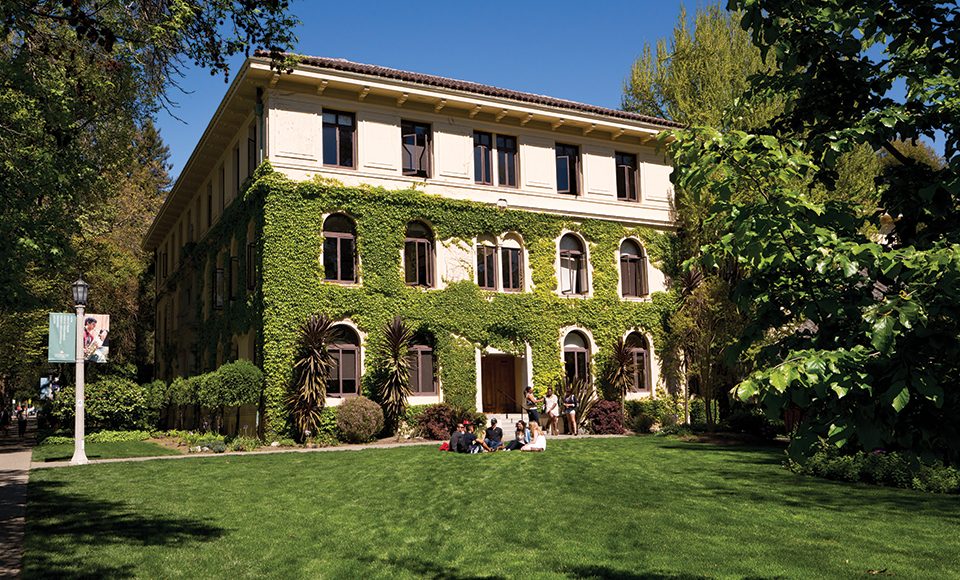
A grant from the California Department of Health Care Access and Information (HCAI) will support the launch of a concentration in Dominican University’s Department of Psychology aimed at preparing more students to work as youth mental health professionals.
The $312,500 grant will help Dominican establish a Certified Wellness Coach (CWC) concentration, training at least 10 undergraduate students annually so they can qualify for a state-issued CWC certificate, administered by HCAI.
The funding is part of the statewide Children and Youth Behavioral Health Initiative (CYBHI), which seeks to address workforce shortages in child wellness and youth mental health services.
Dominican is the first independent university in Northern California to receive HCAI funding to launch a concentration to prepare students to qualify for a CWC certificate.
While certified wellness coaches are not licensed therapists, they can provide non-clinical and pre-clinical behavioral health support to children and young adults up to age 25 in schools, community organizations and health clinics.
The CWC concentration will be available to students studying in Dominican’s undergraduate psychology program, says Dr. LeeAnn Bartolini, professor of psychology in Dominican’s Psychology Department.
Graduates with a CWC certificate from HCAI will be able to enter the workforce directly after earning an undergraduate degree, helping address critical staffing shortages by working alongside licensed mental health professionals in schools and other agencies that serve children and youth up to age 25.
“There is a youth mental health crisis,” Bartolini says. “Certified wellness coaches will supplement existing mental health staff and help expand service capacity. Our goal is to prepare students to support an overwhelmed workforce, particularly in California’s middle and high schools.”
Certified wellness coaches can provide wellness education, support mental health screenings, coordinate care, facilitate individual and group support, and connect youth with clinical or crisis services when needed.
“In a large high school, a Marriage and Family Therapist (MFT) may be responsible for hundreds of students,” Bartolini notes. “A certified wellness coach could address concerns that do not require diagnosis or treatment.”
These concerns may include friendship conflicts, communication challenges with parents, and other everyday life issues. Coaches can also lead group discussions focused on wellness and prevention.
Over the coming months, faculty and staff in Dominican’s Psychology Department are meeting with local middle and high schools to identify field placement opportunities, assess workforce needs, and explore future employment pathways.
The department already maintains numerous long-standing relationships with youth-serving organizations throughout Marin County and the North Bay.
“Approximately five years ago, Marin County made a strong commitment to developing school wellness programs,” Bartolini says.
She credits schools including San Rafael High School, Tamalpais High School, Archie Williams High School, and Novato High School for adopting more holistic approaches to student wellness and engaging students in wellness initiatives.
“Students today are much more open about discussing mental health concerns, including depression, ADHD, and treatment,” Bartolini notes. “There is less stigma than in previous generations.”
The grant will support curriculum development, course revisions, student recruitment and outreach efforts within Dominican’s Psychology Department.
The CWC concentration complements Dominican’s psychology curriculum, which emphasizes psychological science, field experience and independent research.
Currently, all psychology majors must complete 90 hours of fieldwork during their senior year, providing opportunities to learn from diverse communities while reflecting on their own perspectives.
Psychology majors pursuing the certificate will have to complete a minor in Clinical Counseling and a total of 300 fieldwork hours. Most students will begin the internship their junior year after completing foundational coursework, making the CWC pathway accessible to both continuing students and students transferring to Dominican from a community college.
“The psychology program embeds equity into its approach by intentionally combining academic training with community-engaged experiences,” Bartolini says. “Students are introduced to core psychological theories and research methods while examining how social identities, systemic inequities and cultural contexts shape mental health and well-being.”
The concentration’s focus on applied learning, including internships and fieldwork in community settings, prepares students to work with underserved or marginalized populations, Bartolini notes.
“These experiences would help future certified wellness coaches develop cultural humility, adaptability, and an understanding of barriers to care,” she says.
The concentration will also expand career opportunities for undergraduates interested in working with youth in clinical environments without pursuing graduate education.
In addition to middle and high schools, potential employment settings include county behavioral health departments, Child Protective Services, community mental health programs and other public health agencies.
The CWC certificate may also appeal to those who want to gain professional experience before enrolling in advanced degree programs. Students who have completed the concentration will be able to apply for CWC certification after meeting mandatory fieldwork hours.
“We are finding that more students are taking time between undergraduate and graduate education to gain work experience and save money for graduate school,” Bartolini says. “This program creates a win-win opportunity.”
Bartolini says Dominican could become a designated HCAI school by the end of spring 2027, with students entering the certification program soon afterward.